
THANK YOU TO OUR VENUE PARTNERS
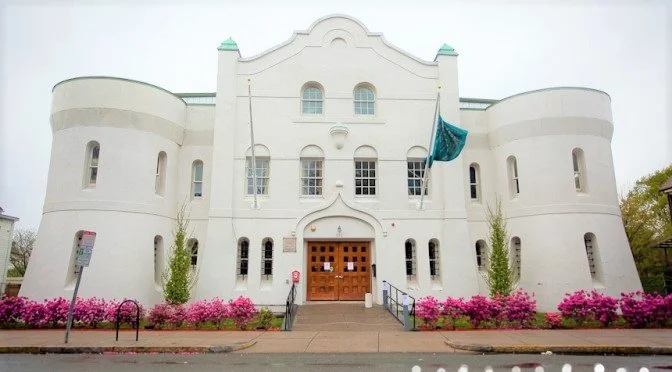
The Armory was built in 1903 by George A. Moore to house the Somerville Light Infantry of the Massachusetts Volunteer Militia. For nearly seventy years after that, it also housed the Massachusetts National Guard. From approximately 1975-2004, the building was used for some community events but largely sat vacant until the State of Massachusetts decided to sell the building in 2004.
The historic armory was purchased by Joseph and Nabil Sater, in collaboration with Highland Realty Trust, in April 2004 from the Commonwealth of Massachusetts for $2.6 million. Owners of the successful Middle East music club in Central Square and patrons of the arts, the Sater brothers successfully embarked upon a vision to create a community arts center for the City of Somerville. Joined later by partner Alan Carrier, they contracted with Single Speed Design who served as award winning architects for the project.
Since 2004, the Armory has been completely restored and brought up to code. Many of the Armory’s historic elements have been preserved such as the Armory’s drill hall, stairwells, turrets, and other important architectural elements. The repurposed Armory opened its doors as a community arts center in 2008, and Arts at the Armory became the anchor tenant in the building, renting and operating the main hall and Cafe.
The building was acquired by the City of Somerville through eminent domain in June 2021.

St. John’s Episcopal Church was formed in 1839 and moved to its current location when the church building construction began in 1882. This building was later expanded with the addition of the Parish Hall. The church was formed and built to serve the needs of the local community.
St. John’s church and its parishioners are woven into the historic fabric of the City of Boston, the community of Jamaica Plain, and the Episcopal Diocese of Massachusetts. The parish was founded by prominent local residents who desired a neighborhood-based place of worship. Early parishioners included General William Hyslop Sumner, Justice John W. McKim and Samuel G. Goodrich, better known in world literature as Peter Parley and former Ambassador to France. Although these men are visible in the historic documents of the parish and Jamaica Plain community, it is notable that a number of women parishioners were known for their accomplishments, in a time when women played a more limited role in community life. These included: writer and publisher Caroline Ticknor, friend of Longfellow, Twain, Dickens and Whitman, Elizabeth Bethune Campbell, the first woman to present a case before the Privy Council of London (she won) and Susan Revere Chapin, great-granddaughter of Paul Revere, who was active in the war effort during both WW I and WW II. The presence of these remarkable women in the parish perhaps presages St. John’s current diverse roster of parishioners and commitment to issues of social justice and activism. Today, St. John’s is a parish with increasing diversity along race, income and sexual orientation, not just in its membership, but those in leadership positions. LEARN MORE
